
Hotels with History (Thailand)
137 Pillars House Chiang Mai began life in the late 1880s as part of the headquarters compound of the British-owned The Borneo Company Limited, sometimes referred to locally as the East Borneo Company or Borneo Trading Company. The company was deeply involved in the teak trade that transformed northern Thailand during the reign of King Chulalongkorn (Rama V).
The story ties closely to Louis Leonowens, son of Anna Leonowens of The King and I fame. Thanks in part to his childhood connection with Prince Chulalongkorn, Louis later returned to Siam and became superintendent of the Borneo Company’s Chiang Mai operations around 1886. The company established its teak headquarters along the Ping River in what is now the Wat Gate district.
At the time, Chiang Mai’s east bank was effectively the foreign commercial quarter. British teak firms, Burmese traders, Chinese merchants, and Sikh guards all operated there. The Borneo Company compound included several massive teak residences and administrative buildings supported by huge teak pillars, reflecting both wealth and status in traditional Lanna culture.
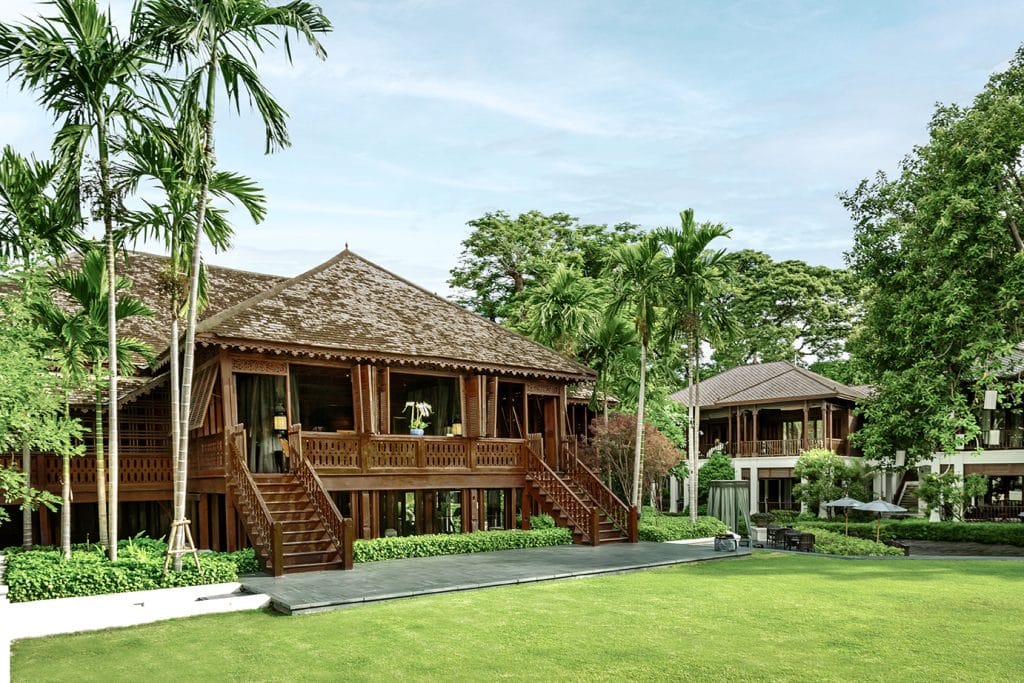
The house now known as “137 Pillars” became famous because it literally stood on 137 teak pillars. According to hotel lore, former owner Jack Bain counted them after a publisher asked why the house had no formal name. In northern Thai tradition, the number of pillars symbolized prestige and prosperity.
During World War II, Japanese forces seized the Borneo Company’s Chiang Mai assets. After the war, the property was sold to Scottish manager William Bain, whose family continued living there for decades. Eventually, the Wongphanlert family purchased and restored the aging teak mansion in the early 2000s, transforming it into the luxury boutique hotel that opened in 2012.
As for the The Borneo Company Limited itself: it was founded in 1856 in Singapore and became one of the most influential British trading houses in Southeast Asia. Besides teak logging in Siam, it operated in shipping, mining, plantations, banking, and regional trade across Borneo, Malaya, Burma, and Thailand. In northern Siam, teak was enormously valuable because it was prized for shipbuilding and railway construction throughout the British Empire.
Today, the hotel preserves much of that colonial-Lanna heritage. The original teak house remains the centerpiece of the property, with photographs, artifacts, and suite names recalling figures from the teak-trading era — including Louis Leonowens and the Bain family.
If you’d like to book a stay at 137 Pillars Chiang Mai contact us: [email protected]